Rotor Servicing and Replacement in Concord
Rotors rarely whisper their problems. They make themselves known, shaking the wheel, grinding underfoot, or turning every stop into a question mark. When rotors go bad, they don’t recover. Letting them slide only piles on risk and cost, putting your safety and wallet on the line. For drivers in Concord, these risks can be even more pronounced due to local driving conditions.
How We Spot Rotor Trouble Before It Gets Worse
Most drivers notice something’s off long before they see the damage. The steering wheel vibrates when braking, or the pedal pulses instead of staying steady. Sometimes, the whole car shudders as you slow for a light. These aren’t quirks, they’re warnings that your rotors are uneven, cracked, or worn thin.
- Steering Wheel Vibration: The wheel shakes or wobbles as you brake, especially at speed.
- Pulsing Brake Pedal: The pedal pushes back against your foot, refusing to stay smooth.
- Grinding or Scraping Noises: Metal-on-metal sounds signal that pads are biting into the rotor.
- Longer Stopping Distance: The car needs more room to stop than it used to.
- Visible Scoring or Grooves: Deep lines or rough patches show up when you check the rotors.
When these signs show up, waiting only makes things worse. Damaged rotors put extra strain on calipers, pads, and brake lines. What starts as a small vibration can turn into a full brake system overhaul if ignored.
Deciding When We Resurface or Replace Rotors
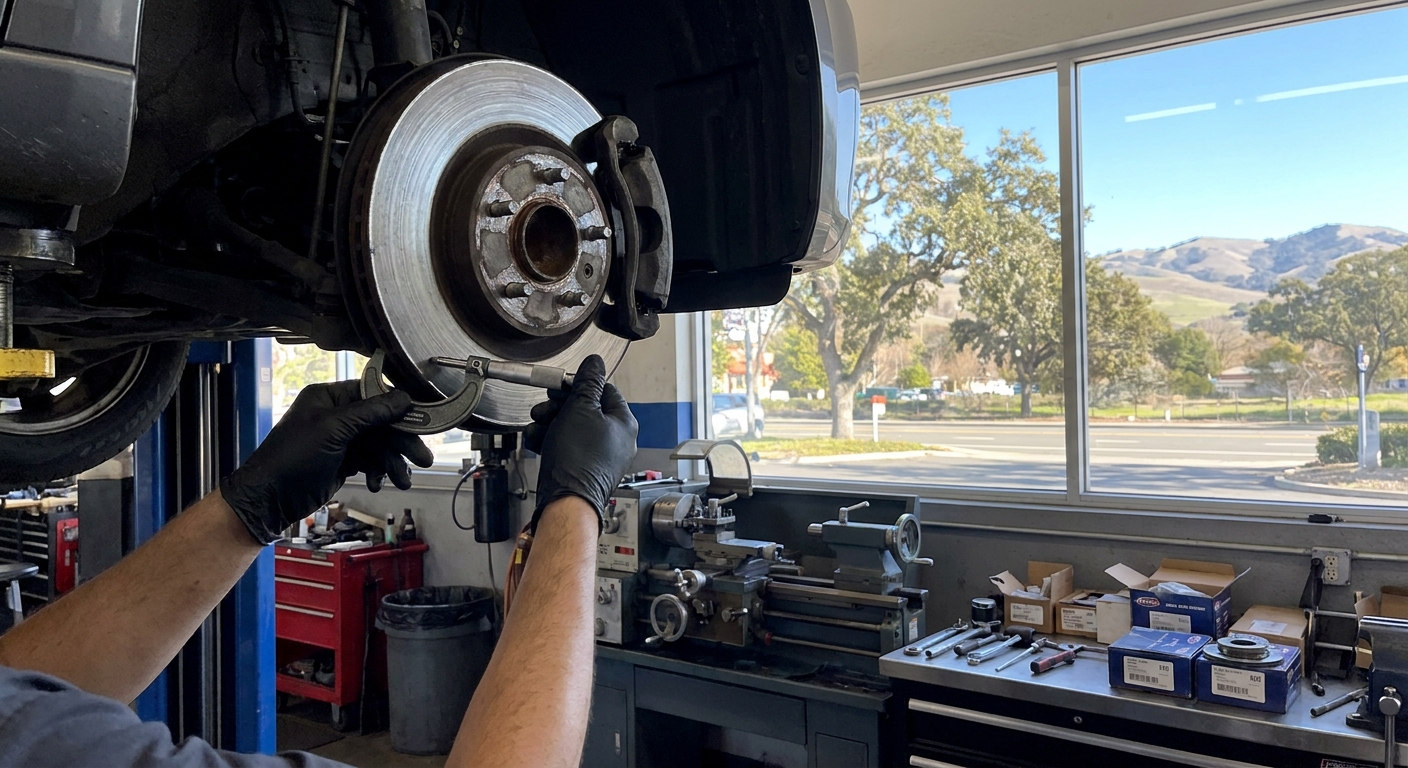
Some rotors can be resurfaced, which means shaving off a thin layer to restore a smooth finish. That only works if there’s enough thickness left and no deep cracks or warping. Once rotors drop below spec or show serious damage, replacement is the only safe move. We measure every rotor with precision tools, not rough estimates, and make the call based on real numbers.
- Resurfacing: Smooths out minor imperfections when the rotor is still solid.
- Replacement: Needed for rotors that are too thin, cracked, or warped beyond repair.
- Cost Difference: Resurfacing saves money short-term, but worn rotors don’t last much longer.
- Longevity: New rotors deliver better, more reliable braking than ones barely within limits.
Trying to stretch a worn rotor only leads to another visit, or worse, a brake failure when you least expect it. We don’t gamble with safety or cut corners on measurements.
Why Damaged Rotors Change the Way You Stop
When the rotor surface isn’t flat, brake pads can’t grip evenly. That leads to uneven wear, weak stops, and unpredictable handling. Sometimes the ABS kicks in for no reason. The car might pull to one side. None of this happens with healthy rotors in place.
Heat builds up faster on damaged rotors. Uneven contact creates hot spots, warping the metal even more. Over time, this cycle wears down brake fluid, making every stop less certain. Ignoring rotor issues only multiplies the headaches and costs.
What We See Causing Rotor Wear and Warping
Normal driving wears rotors down, but warping usually points to something else. Hard stops from highway speeds generate intense heat. Hitting water right after can twist the metal. Cheap rotors and low-grade pads don’t hold up. Even a tire change with over-tightened lug nuts can bend a rotor out of shape.
- Aggressive Braking: Repeated hard stops, especially on hills or highways, overheat rotors quickly.
- Thin or Low-Quality Rotors: Budget parts wear out and warp faster than premium options.
- Caliper Issues: Sticking calipers create hot spots and bend rotors over time.
- Worn Brake Pads: Old pads grind into the rotor, leaving deep grooves.
- Improper Installation: Uneven torque or dirty surfaces during installation can warp rotors.
Regular inspections and quality parts keep most of these problems at bay. Skipping checkups or cutting corners on parts only invites trouble, especially for vehicles frequently driven in Concord and its surrounding areas.
How We Handle Rotor Service Timing
Rotor work doesn’t drag on. Resurfacing usually wraps up in under an hour, depending on the shop’s setup. Full replacement takes a bit longer, since we check calipers and bleed the system if needed. Most jobs finish in less than two hours unless there’s extra damage to deal with.
For straightforward cases, same-day service is common. More complicated repairs, like seized calipers or rusted bolts, can add time, but that’s not the norm. In Concord, most shops handle rotor work while you wait, especially if pads are being replaced too.
What Happens When We Service Your Rotors
Every rotor job starts with a full inspection. Wheels come off, rotors get measured for thickness and runout, and we check for cracks or grooves. If the rotors are salvageable, we machine them smooth. If not, we install new ones and fresh pads. Calipers get checked for sticking or leaks, and brake fluid is topped off or flushed if needed. Everything is torqued to spec, and we test drive the car before handing it back.
- Visual Inspection: We check rotors, pads, calipers, and lines for any signs of wear or damage.
- Measurement: Rotor thickness and flatness are compared to manufacturer specs.
- Resurfacing or Replacement: We machine or swap rotors based on their condition.
- Pad Replacement: New pads go on with rotor work to keep braking smooth and even.
- Hardware and Lubrication: Clips, springs, and pins are cleaned or replaced so everything moves freely.
- Test Drive: We drive the car to confirm smooth, quiet, and confident braking.
After service, you should feel a firm pedal and steady stops. If anything feels off, we double-check before you leave. Our goal is to make sure your brakes work right the first time.
Does Your Car Need Rotor Work?
If your brakes shake, grind, or feel soft, don't wait until it gets worse. Brake Pro's handles warped rotors, brake rotor replacement in Concord, and full brake system repairs without the runaround. Call 925-428-1213 or schedule an appointment and we'll take care of it fast.